
Ethical Jewelry: Sustainable Luxury for Modern Buyers – Luxury jewelry has long been associated with beauty, craftsmanship, and exclusivity. Today, however, consumers are looking beyond aesthetics. Modern buyers increasingly want to know where their jewelry comes from, how it was made, and whether its production aligns with their personal values. This shift has given rise to one of the most important movements in the jewelry industry: ethical jewelry.
Ethical jewelry combines exceptional design and premium materials with responsible sourcing, fair labor practices, environmental stewardship, and transparency. Rather than focusing solely on luxury, ethical jewelry seeks to create a positive impact throughout the supply chain while delivering timeless elegance. As sustainability becomes a defining factor in purchasing decisions, ethical jewelry is reshaping the future of fine jewelry worldwide.
What Is Ethical Jewelry?
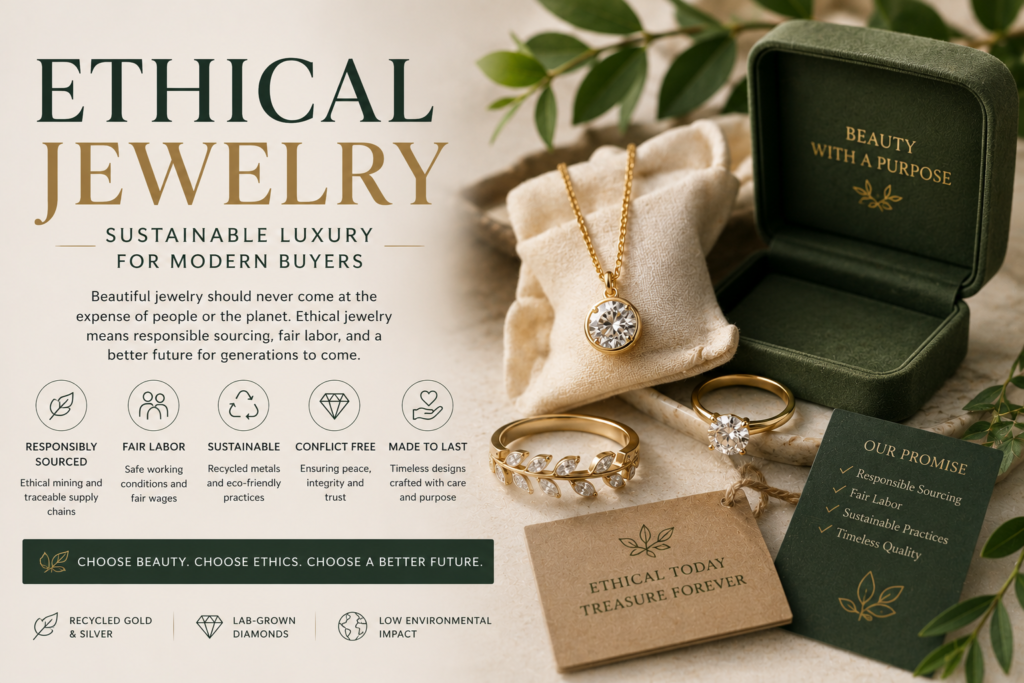
Ethical jewelry refers to jewelry that is produced with consideration for both people and the planet. It emphasizes responsible sourcing of precious metals and gemstones, fair treatment of workers, environmentally conscious production methods, and transparency throughout the supply chain.
Unlike traditional jewelry, where consumers may have little information about the origins of materials, ethical jewelry brands prioritize traceability and accountability. Ethical practices can include:
- Responsibly sourced gemstones
- Recycled precious metals
- Fair wages and safe working conditions
- Reduced environmental impact
- Transparent supply chains
- Conflict-free diamonds
- Sustainable packaging
The goal is to ensure that luxury does not come at the expense of communities, workers, or natural ecosystems.
Why Ethical Jewelry Is Growing in Popularity
Consumer values have evolved significantly over the past decade. Today’s buyers, especially Millennials and Generation Z, are increasingly interested in sustainability, social responsibility, and transparency.
Many consumers now ask questions such as:
- Where was this diamond sourced?
- Were workers treated fairly?
- What environmental impact did production have?
- Is the brand transparent about its practices?
These concerns have transformed ethical sourcing from a niche preference into a major purchasing factor. Industry reports show growing demand for ethically sourced materials, recycled metals, and traceable supply chains across the luxury jewelry market.
The Core Principles of Ethical Jewelry
Responsible Sourcing
Responsible sourcing is one of the foundations of ethical jewelry. It involves obtaining metals and gemstones from suppliers that follow environmental and social standards.
Ethical sourcing aims to reduce:
- Unsafe mining practices
- Environmental degradation
- Child labor
- Worker exploitation
- Conflict financing
Brands committed to ethical sourcing often work closely with certified suppliers and provide information about the origins of their materials.
Fair Labor Practices
Ethical jewelry is about more than materials. It also focuses on the people involved in creating each piece.
Responsible brands seek to ensure:
- Safe working environments
- Fair wages
- Worker protections
- Equal opportunities
- Respect for human rights
Many consumers now view labor transparency as equally important as environmental sustainability. Discussions within the jewelry community frequently highlight worker welfare as a critical component of ethical production.
Environmental Responsibility
Mining precious metals and gemstones can have significant environmental consequences. Ethical jewelry brands aim to minimize these impacts through sustainable practices.
Examples include:
- Using recycled metals
- Reducing waste
- Limiting carbon emissions
- Conserving water resources
- Supporting responsible mining operations
The use of recycled gold and silver has become particularly popular because it reduces the need for additional mining while maintaining the same quality and beauty as newly mined materials.
Ethical Materials in Modern Jewelry
The materials used in jewelry play a major role in determining its ethical credentials.
Recycled Gold and Silver
Recycled precious metals are among the most widely adopted sustainable materials in jewelry production.
Benefits include:
- Reduced environmental impact
- Less mining activity
- Lower resource consumption
- Preservation of quality and durability
Recycled metals allow luxury brands to create beautiful pieces while supporting circular economy principles.
Lab-Grown Diamonds
Lab-grown diamonds have emerged as one of the most significant developments in ethical jewelry.
These diamonds are:
- Chemically identical to mined diamonds
- Conflict-free
- Highly traceable
- Often associated with lower environmental impact
As consumers seek alternatives to traditional diamond mining, lab-grown diamonds continue to gain popularity within both engagement rings and fine jewelry collections.
Responsibly Sourced Gemstones
Many ethical jewelers now prioritize gemstones with documented origins and traceable supply chains.
Consumers increasingly value gemstones that can be linked to responsible mining practices and transparent sourcing networks. Traceability has become one of the key indicators of genuinely ethical jewelry.
Ethical Jewelry and Luxury Can Coexist
For years, some consumers assumed sustainability required sacrificing quality or elegance. That perception is rapidly changing.
Modern ethical jewelry demonstrates that luxury and responsibility can coexist beautifully. Many of today’s most sought-after jewelry collections combine:
- Exceptional craftsmanship
- Premium materials
- Innovative design
- Responsible sourcing
In fact, sustainability is increasingly becoming part of the definition of luxury itself. Consumers are beginning to view ethical practices as an essential component of true luxury rather than an optional feature.
Trends Shaping Ethical Jewelry in 2026
The ethical jewelry movement continues to evolve as technology and consumer expectations advance.
Transparency and Traceability
Buyers increasingly want proof of ethical claims rather than marketing language.
Brands are responding by offering:
- Detailed sourcing information
- Product origin tracking
- Supply chain transparency
- Digital certificates
Traceability is becoming one of the strongest indicators of consumer trust.
Sustainable Luxury Collections
Luxury brands are launching collections specifically designed around sustainability principles.
These collections often feature:
- Recycled metals
- Lab-grown diamonds
- Low-impact production
- Sustainable packaging
The trend reflects growing consumer demand for products that align with both personal values and luxury expectations.
Personalized Ethical Jewelry
Customization continues to gain popularity.
Consumers increasingly seek:
- Custom engagement rings
- Personalized necklaces
- Birthstone jewelry
- Engraved heirloom pieces
Combining personalization with ethical sourcing creates jewelry that is both meaningful and responsibly produced.
How to Identify Truly Ethical Jewelry
As ethical jewelry becomes more popular, consumers should learn how to distinguish genuine commitments from marketing claims.
Consider the following questions:
Does the Brand Provide Transparency?
Ethical brands typically share information about:
- Material origins
- Manufacturing processes
- Supplier partnerships
- Sustainability initiatives
Are Certifications Available?
Look for recognized certifications and industry standards that support sourcing claims.
Is Traceability Offered?
The ability to track materials back to their source is often a strong indicator of ethical practices.
Are Specific Claims Supported?
Experts frequently recommend looking for detailed evidence rather than vague terms such as “eco-friendly” or “responsible.” Transparency and verifiable information are key.
Ethical Jewelry as an Investment
Ethical jewelry offers value beyond aesthetics.
Consumers often appreciate:
- Long-term durability
- Timeless design
- Meaningful craftsmanship
- Positive environmental impact
- Social responsibility
Research suggests many luxury consumers are willing to pay more for products that align with sustainability values, particularly when quality and design remain uncompromised.
Because ethical jewelry is often crafted with high-quality materials and thoughtful design, it can become a lasting investment and even a future family heirloom.
The Future of Ethical Jewelry
The future of luxury jewelry is increasingly tied to sustainability and accountability. Innovations in material science, digital traceability, responsible sourcing, and lab-grown gemstones are transforming how jewelry is designed, produced, and sold. Consumers are driving this change by demanding greater transparency and higher ethical standards from the brands they support.
As the industry continues to evolve, ethical jewelry is expected to move from a specialized category into the mainstream, becoming a standard expectation among modern luxury buyers.
Final Thoughts
Ethical jewelry represents a new era of luxury—one where beauty, craftsmanship, and responsibility exist together. Modern buyers are no longer satisfied with simply owning beautiful jewelry; they want confidence that their purchases support fair labor practices, responsible sourcing, and environmental sustainability.
From recycled precious metals and lab-grown diamonds to transparent supply chains and traceable gemstones, ethical jewelry offers a way to enjoy luxury with purpose. As sustainability continues to influence consumer choices, ethical jewelry is poised to become one of the defining trends of the modern jewelry industry.
For today’s conscious consumers, true luxury is not just about what a piece looks like—it is also about the story behind it and the positive impact it creates.