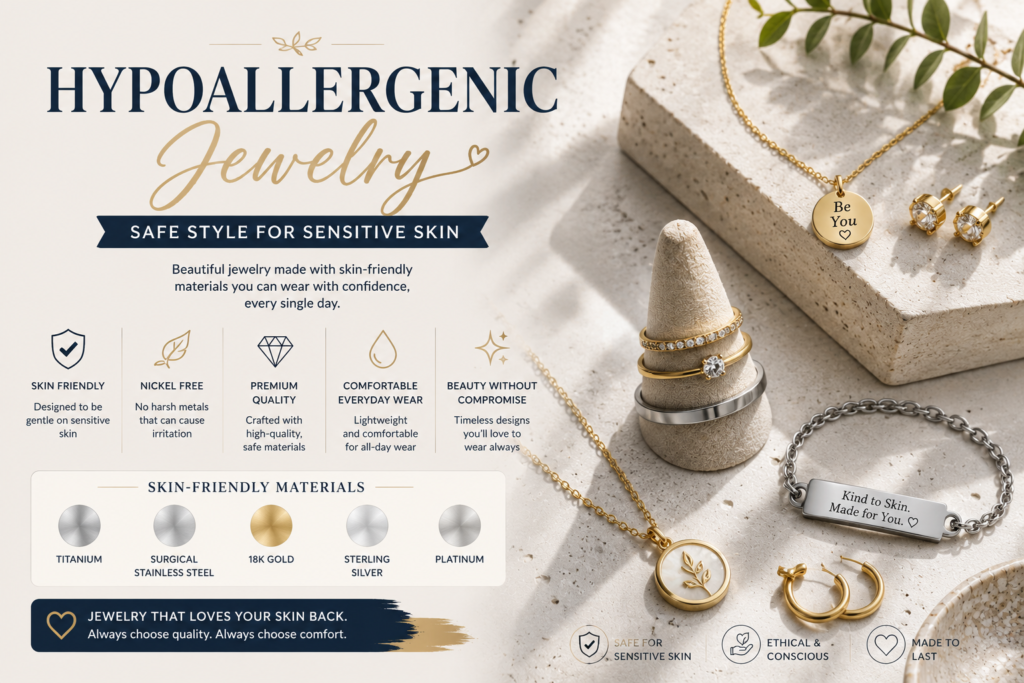

Hypoallergenic Jewelry: Safe Style for Sensitive Skin – Jewelry is one of the most popular fashion accessories in the world, allowing people to express their personality, enhance their style, and commemorate special moments. However, for millions of people with sensitive skin, wearing jewelry can sometimes lead to irritation, redness, itching, or even painful allergic reactions. Fortunately, hypoallergenic jewelry offers a stylish solution that combines beauty, comfort, and skin-friendly materials.
As awareness of skin sensitivities grows, hypoallergenic jewelry has become one of the fastest-growing segments in the jewelry industry. Consumers are increasingly seeking pieces that not only look elegant but also provide peace of mind for daily wear. Whether you’re shopping for earrings, necklaces, rings, or bracelets, understanding hypoallergenic jewelry can help you make informed decisions and enjoy accessories without discomfort.
In this guide, we’ll explore what hypoallergenic jewelry is, why it matters, the best materials to choose, and how to find stylish pieces that are safe for sensitive skin.
What Is Hypoallergenic Jewelry?
Hypoallergenic jewelry refers to jewelry made from materials that are less likely to cause allergic reactions or skin irritation. While no material can guarantee a completely allergy-free experience for every individual, hypoallergenic metals significantly reduce the risk of adverse skin reactions.
Most jewelry-related allergies are caused by certain metals commonly found in jewelry alloys, especially nickel. Nickel is often used because it is durable, affordable, and easy to work with, but it is also one of the most common causes of contact dermatitis worldwide.
Hypoallergenic jewelry avoids or minimizes the use of allergenic metals and instead utilizes skin-friendly alternatives that are safer for prolonged contact with the skin.
Why Sensitive Skin Reacts to Jewelry
Skin reactions to jewelry occur when the body’s immune system identifies a metal as a harmful substance. This can trigger allergic contact dermatitis, which may result in symptoms such as:
- Redness
- Itching
- Dry or flaky skin
- Swelling
- Rash-like bumps
- Burning sensations
These reactions often occur where jewelry touches the skin, such as earlobes, wrists, fingers, or around the neck.
Even people who have worn jewelry comfortably for years can develop sensitivities over time, making hypoallergenic options increasingly important.
The Most Common Jewelry Allergens
Understanding which metals commonly cause reactions can help consumers make safer jewelry choices.
Nickel
Nickel is the leading cause of jewelry allergies worldwide. It is often mixed with other metals to increase durability and reduce production costs.
Common jewelry items that may contain nickel include:
- Fashion jewelry
- Costume jewelry
- Cheap earrings
- Plated accessories
For individuals with nickel allergies, even small amounts of exposure can cause significant irritation.
Cobalt
Although less common than nickel, cobalt can also trigger allergic reactions in some people. It is occasionally used in metal alloys and jewelry components.
Brass and Low-Quality Alloys
Some inexpensive jewelry contains mixed metal alloys that may include traces of nickel, cobalt, or other irritants. These pieces are often more likely to cause skin reactions.
Best Hypoallergenic Jewelry Materials
Choosing the right metal is one of the most important factors when shopping for skin-friendly jewelry.
Platinum
Platinum is considered one of the best hypoallergenic metals available.
Benefits include:
- Naturally hypoallergenic
- Highly durable
- Resistant to tarnishing
- Luxurious appearance
Because platinum is typically very pure, it is an excellent choice for individuals with sensitive skin.
Titanium
Titanium has gained popularity for both fashion and fine jewelry.
Advantages include:
- Extremely lightweight
- Highly resistant to corrosion
- Strong and durable
- Rarely causes allergic reactions
Titanium is frequently used for earrings, wedding bands, and body jewelry due to its skin-friendly properties.
Surgical Stainless Steel
High-quality surgical stainless steel is widely recognized as a hypoallergenic material.
Benefits include:
- Affordable
- Durable
- Modern appearance
- Resistant to rust and tarnish
However, consumers should ensure they are purchasing medical-grade or surgical-grade stainless steel from reputable sources.
Gold
Gold can be hypoallergenic depending on its purity.
24K Gold
Pure gold contains no allergenic metals but is generally too soft for everyday jewelry.
18K Gold
18K gold contains 75% pure gold and is often a good option for sensitive skin.
14K Gold
Many people with mild sensitivities can comfortably wear 14K gold, although alloy composition varies between manufacturers.
Sterling Silver
Sterling silver is a popular choice for elegant jewelry.
High-quality sterling silver typically contains:
- 92.5% silver
- 7.5% other metals
Consumers with metal allergies should verify that nickel-free sterling silver is being used.
Hypoallergenic Earrings: A Popular Choice
Earrings are among the most common sources of jewelry-related allergic reactions because they directly contact sensitive pierced skin.
Hypoallergenic earrings often feature:
- Titanium posts
- Platinum settings
- Nickel-free gold
- Surgical stainless steel
For individuals prone to ear irritation, investing in quality hypoallergenic earrings can dramatically improve comfort.
Stylish Hypoallergenic Jewelry Trends in 2026
Hypoallergenic jewelry is no longer limited to simple or clinical-looking designs. Modern collections offer fashionable options that rival traditional luxury jewelry.
Minimalist Jewelry
Clean lines and understated elegance continue to dominate jewelry trends.
Popular pieces include:
- Thin stacking rings
- Delicate chain necklaces
- Small hoop earrings
- Simple bangles
Minimalist designs pair well with hypoallergenic metals like platinum and titanium.
Personalized Jewelry
Custom jewelry remains highly sought after.
Popular personalized options include:
- Name necklaces
- Initial pendants
- Coordinate bracelets
- Engraved rings
Many premium jewelers now offer personalized pieces crafted from hypoallergenic materials.
Lab-Grown Diamond Jewelry
Lab-grown diamonds are becoming increasingly popular among consumers seeking sustainable and skin-friendly luxury.
When paired with platinum or nickel-free gold settings, lab-grown diamond jewelry offers both beauty and comfort.
Layered Necklaces
Layered jewelry continues to trend in fashion circles.
Hypoallergenic layered necklaces allow wearers to achieve a stylish look without worrying about irritation caused by multiple metal chains.
Benefits of Wearing Hypoallergenic Jewelry
Choosing hypoallergenic jewelry provides advantages beyond allergy prevention.
Greater Comfort
Many wearers experience significantly improved comfort during daily use.
Reduced Skin Irritation
The risk of redness, itching, and allergic reactions is greatly minimized.
Better Long-Term Wearability
High-quality hypoallergenic metals often last longer than inexpensive fashion jewelry.
Improved Confidence
Knowing that jewelry won’t cause irritation allows wearers to enjoy accessories without worry.
Suitable for Everyday Use
Many hypoallergenic materials are highly durable, making them ideal for daily wear.
How to Choose Hypoallergenic Jewelry
Shopping for hypoallergenic jewelry requires careful consideration.
Verify Metal Composition
Always review product descriptions and ask jewelers about metal content.
Look for terms such as:
- Nickel-free
- Hypoallergenic
- Surgical-grade
- Medical-grade titanium
Buy from Reputable Jewelers
Established jewelers are more likely to provide accurate material information and quality craftsmanship.
Consider Your Specific Sensitivities
Different individuals react differently to various metals.
If you know you have a nickel allergy, prioritize completely nickel-free options.
Test New Jewelry Carefully
When trying a new metal for the first time, wear it for short periods initially to monitor any reactions.
Caring for Hypoallergenic Jewelry
Proper maintenance helps preserve both appearance and comfort.
Clean Regularly
Use gentle soap and warm water to remove dirt, oils, and cosmetic residue.
Store Properly
Keep jewelry in individual pouches or compartments to prevent scratching and contamination.
Avoid Harsh Chemicals
Perfumes, lotions, and cleaning products can damage jewelry finishes and potentially affect sensitive skin.
Inspect Settings and Clasps
Regular inspections ensure jewelry remains safe and comfortable to wear.
Hypoallergenic Jewelry as a Thoughtful Gift
Because sensitive skin affects so many people, hypoallergenic jewelry makes an excellent gift choice.
Popular gift occasions include:
- Birthdays
- Anniversaries
- Mother’s Day
- Valentine’s Day
- Graduations
- Holidays
By selecting skin-friendly materials, gift-givers demonstrate both thoughtfulness and attention to the recipient’s comfort.
The Future of Hypoallergenic Jewelry
Consumer demand for health-conscious and skin-friendly products continues to shape the jewelry industry. Manufacturers are investing in innovative materials, higher-quality alloys, and improved transparency regarding metal composition.
At the same time, sustainability trends are driving interest in responsibly sourced precious metals, recycled materials, and lab-grown gemstones. The combination of ethical production and hypoallergenic design is expected to define the next generation of luxury jewelry.
Final Thoughts
Hypoallergenic jewelry offers the perfect balance between style, comfort, and safety for individuals with sensitive skin. By choosing skin-friendly materials such as platinum, titanium, surgical stainless steel, high-quality gold, and nickel-free sterling silver, wearers can enjoy beautiful jewelry without the discomfort often associated with metal allergies.
As jewelry trends continue to evolve, consumers no longer need to sacrifice fashion for comfort. From minimalist designs and personalized pieces to luxurious lab-grown diamond creations, today’s hypoallergenic jewelry options provide endless opportunities for self-expression and elegance.
Whether you’re shopping for yourself or searching for the perfect gift, investing in hypoallergenic jewelry is a smart choice that prioritizes both beauty and well-being. With the right materials and proper care, these pieces can become treasured accessories that are worn comfortably for years to come.