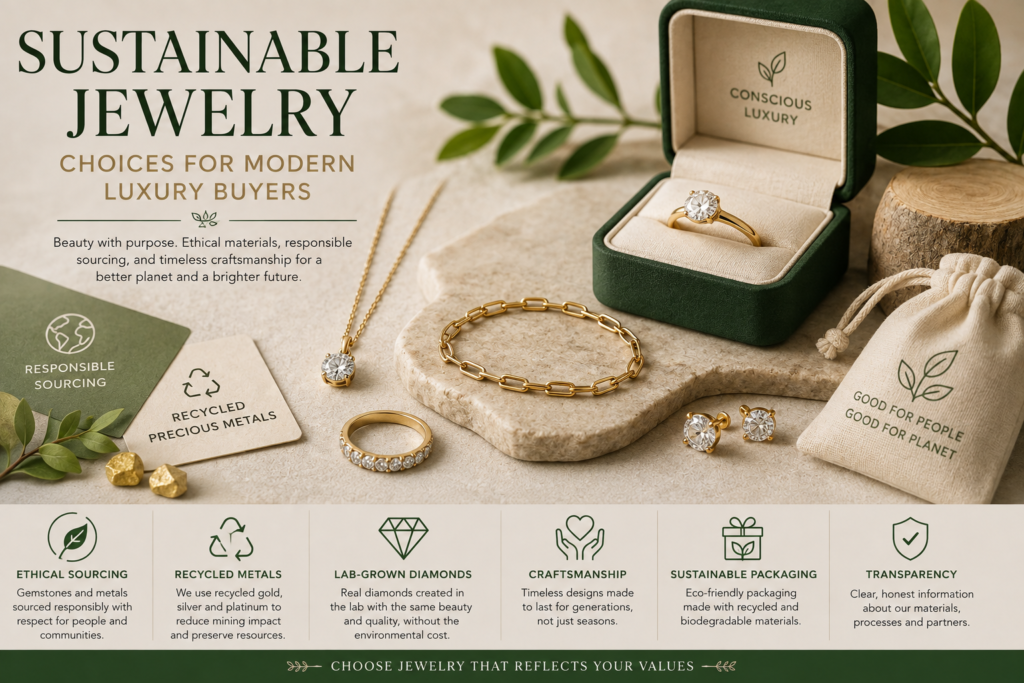

Sustainable Jewelry Choices for Modern Luxury Buyers – Luxury is evolving. In the past, fine jewelry was often valued primarily for its rarity, craftsmanship, and prestige. Today, a growing number of consumers are looking beyond beauty and exclusivity. They want to know where their jewelry comes from, how it was made, and whether its production aligns with their values. As a result, sustainable jewelry has become one of the most influential trends in the luxury market.
In 2026, sustainability is no longer a niche concern. It has become a major factor influencing purchasing decisions, especially among younger generations of luxury buyers. Consumers are seeking jewelry that combines exceptional design with ethical sourcing, environmental responsibility, and social impact. From recycled precious metals to lab-grown diamonds and transparent supply chains, sustainable jewelry offers a modern approach to luxury without compromising quality or elegance.
This guide explores what sustainable jewelry means, why it matters, and how modern luxury buyers can make informed choices when investing in fine jewelry.
What Is Sustainable Jewelry?
Sustainable jewelry refers to jewelry produced with consideration for environmental, social, and ethical impacts throughout its lifecycle.
This includes:
- Responsibly sourced gemstones
- Recycled precious metals
- Ethical labor practices
- Reduced environmental impact
- Transparent supply chains
- Long-lasting craftsmanship
The goal is to create beautiful jewelry while minimizing harm to people and the planet.
Unlike fast-fashion accessories that are often mass-produced and disposable, sustainable jewelry emphasizes quality, longevity, and responsible production.
Why Sustainability Matters in the Jewelry Industry
The jewelry industry has historically faced challenges related to mining, labor conditions, and environmental impact.
Traditional mining operations can sometimes contribute to:
- Habitat destruction
- Water pollution
- High carbon emissions
- Unsafe working conditions
- Community displacement
As awareness of these issues has grown, consumers have become more interested in understanding how their jewelry is sourced and manufactured.
Luxury buyers increasingly recognize that purchasing decisions can influence industry practices and encourage more responsible production methods.
The Rise of Conscious Luxury
Modern consumers are redefining what luxury means.
Instead of focusing solely on status or exclusivity, many buyers now value:
- Authenticity
- Transparency
- Sustainability
- Craftsmanship
- Personal meaning
This shift has created growing demand for jewelry that reflects both style and social responsibility.
Many consumers are willing to invest more in pieces that align with their values because they see these purchases as long-term investments rather than short-term trends.
Recycled Precious Metals
One of the most significant developments in sustainable jewelry is the use of recycled precious metals.
What Are Recycled Metals?
Recycled metals are recovered from existing sources rather than newly mined materials.
Common recycled metals include:
- Gold
- Silver
- Platinum
These materials may come from:
- Existing jewelry
- Industrial products
- Electronics
- Precious metal scrap
After refining, recycled metals are chemically identical to newly mined metals and offer the same quality and durability.
Environmental Benefits
Using recycled metals helps reduce:
- Mining activity
- Energy consumption
- Waste production
- Environmental disruption
For environmentally conscious buyers, recycled gold and silver provide an attractive alternative to newly extracted materials.
Lab-Grown Diamonds
Lab-grown diamonds have become one of the most important innovations in sustainable luxury jewelry.
What Are Lab-Grown Diamonds?
Lab-grown diamonds are created using advanced technology that replicates the natural diamond formation process.
They possess the same:
- Chemical composition
- Physical properties
- Optical characteristics
as mined diamonds.
Why Buyers Choose Lab-Grown Diamonds
Several factors contribute to their popularity:
Ethical Sourcing
Lab-grown diamonds eliminate concerns associated with certain mining practices.
Environmental Advantages
Many lab-grown diamond producers focus on reducing environmental impact through more efficient production methods.
Excellent Value
Lab-grown diamonds often provide larger sizes or higher quality within the same budget.
As consumer awareness grows, lab-grown diamonds continue to gain acceptance in the luxury jewelry market.
Responsibly Sourced Gemstones
Gemstones are another important aspect of sustainable jewelry.
Ethical Mining Practices
Responsible gemstone suppliers prioritize:
- Fair labor standards
- Safe working conditions
- Environmental stewardship
- Community support
These practices help ensure that gemstone production benefits both workers and local communities.
Traceability
Many modern jewelry brands are investing in gemstone traceability systems.
These programs allow buyers to understand:
- Where gemstones originated
- How they were mined
- How they moved through the supply chain
Transparency helps consumers make more informed purchasing decisions.
Artisan Craftsmanship and Small-Batch Production
Sustainability is not only about materials. It also involves how jewelry is produced.
Many sustainable jewelry brands focus on:
- Handcrafted production
- Small-batch collections
- Local manufacturing
- Traditional craftsmanship
These approaches often reduce waste while supporting skilled artisans and preserving valuable craft traditions.
Consumers increasingly appreciate jewelry that reflects exceptional craftsmanship rather than mass production.
The Appeal of Vintage and Heirloom Jewelry
Vintage jewelry is one of the most sustainable choices available.
Why Vintage Jewelry Is Sustainable
Purchasing vintage jewelry extends the life of existing pieces and reduces demand for newly sourced materials.
Benefits include:
- Reduced environmental impact
- Unique designs
- Historical significance
- Exceptional craftsmanship
Many luxury buyers view vintage jewelry as a responsible and stylish alternative to newly manufactured pieces.
Heirloom Jewelry
Family heirlooms carry sentimental value while promoting sustainability through reuse and preservation.
Many jewelers now offer redesign services that transform inherited pieces into modern creations while maintaining emotional significance.
Sustainable Packaging Matters
Responsible jewelry brands are increasingly addressing packaging waste.
Sustainable packaging may include:
- Recycled materials
- Reusable boxes
- Minimal packaging
- Biodegradable components
- Plastic-free shipping materials
Although packaging represents only a small portion of a product’s environmental footprint, consumers often view it as an important reflection of a brand’s values.
Quality Over Quantity
One of the key principles of sustainable luxury is buying fewer, better products.
Rather than accumulating numerous trend-driven accessories, consumers are investing in timeless pieces designed to last for years or even generations.
Examples include:
- Diamond stud earrings
- Tennis bracelets
- Gold necklaces
- Engagement rings
- Signet rings
These classic designs remain stylish regardless of changing fashion trends.
Long-lasting jewelry naturally supports sustainability by reducing replacement and waste.
Questions to Ask Before Buying Sustainable Jewelry
Modern luxury buyers can make more informed decisions by asking important questions.
Where Did the Materials Come From?
Understanding the source of metals and gemstones helps evaluate sustainability claims.
Does the Brand Provide Transparency?
Reputable brands often share information about sourcing, manufacturing, and environmental initiatives.
Is the Jewelry Designed to Last?
Durable materials and quality craftsmanship support long-term ownership.
Are Ethical Standards Clearly Communicated?
Brands committed to sustainability are typically willing to discuss labor practices and supply chain policies.
These questions help buyers distinguish genuine sustainability efforts from marketing claims.
Sustainable Jewelry Trends in 2026
Several trends are shaping the future of responsible luxury.
Lab-Grown Diamonds
Demand continues to rise as consumers seek ethical and affordable alternatives.
Recycled Gold Collections
More luxury brands are incorporating recycled metals into their core collections.
Personalized Jewelry
Consumers increasingly prefer meaningful, customized pieces that hold lasting emotional value.
Vintage and Estate Jewelry
Interest in vintage jewelry continues to grow due to its sustainability and uniqueness.
Transparent Supply Chains
Technology is improving traceability, allowing consumers greater visibility into jewelry production.
These trends reflect a broader movement toward conscious consumption across the luxury market.
Why Sustainable Jewelry Appeals to Modern Luxury Buyers
Today’s consumers want products that reflect both personal style and personal values.
Sustainable jewelry offers:
- Beauty
- Quality
- Transparency
- Responsibility
- Long-term value
Rather than viewing sustainability and luxury as opposites, modern buyers increasingly see them as complementary qualities.
A well-crafted piece of sustainable jewelry can provide both emotional satisfaction and confidence in responsible purchasing decisions.
The Future of Sustainable Luxury
The future of fine jewelry will likely involve greater emphasis on responsible sourcing, technological innovation, and transparency.
As consumers continue demanding accountability, jewelry brands are expected to invest further in:
- Ethical sourcing programs
- Carbon reduction initiatives
- Traceability technologies
- Recycled materials
- Sustainable manufacturing
These advancements will help shape a jewelry industry that balances luxury with environmental and social responsibility.
Final Thoughts
Sustainable jewelry is redefining modern luxury. In 2026, buyers are increasingly choosing pieces that offer not only beauty and craftsmanship but also ethical sourcing, environmental responsibility, and lasting value.
From recycled precious metals and lab-grown diamonds to vintage treasures and responsibly sourced gemstones, there are more sustainable options available than ever before. These choices allow consumers to enjoy fine jewelry while supporting practices that align with their values.
For modern luxury buyers, sustainable jewelry represents more than a trend. It reflects a commitment to thoughtful consumption, meaningful ownership, and a future where elegance and responsibility go hand in hand.